Otavalo, Baños, Quito, Galapagos
I´m in Puerto Ayora, on Santa Cruz Island in the Galapagos. I got here the day before yesterday in the afternoon by way of taxi, plane, bus, ferry, taxi. This little town is adorable and neighborhood-y. So adorable and neighborhood-y that they have parties in the square, with live music and volleyball and food galore. So adorable and neighborhood-y that when I was walking around yesterday morning a little before 6, there were still people in the square drinking beer. Ya. Methinks these peeps know how to party.
Earlier, I flew into Quito from Cusco, and I didn´t do much. I had a day there, and I was still heavy with the sickness, so didn´t see a lot of Quito. What I did see, I didn´t completely love. I can´t get into the urban areas… I think I compare these cities to the big cities in America, and these are a lot different-in my eyes, not in a good way.
I took a two hour bus to Otavalo, stayed in a little village called San Pablo. My hotel was great, and a perfect respite to fight my evil illness. I hired a tour guide and did a 4 hour hike around Lake Cuicocha, which was awesome. The lake is actually an old volcano that erupted and then collapsed on itself.
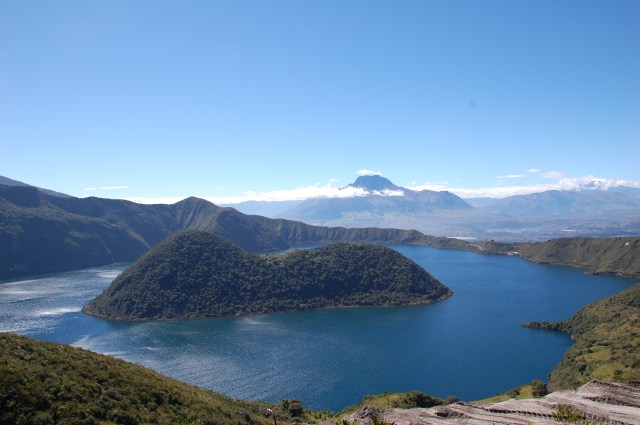
Lake Cuicocha
Then we stopped by my guide´s friend´s house, and his wife was making string.
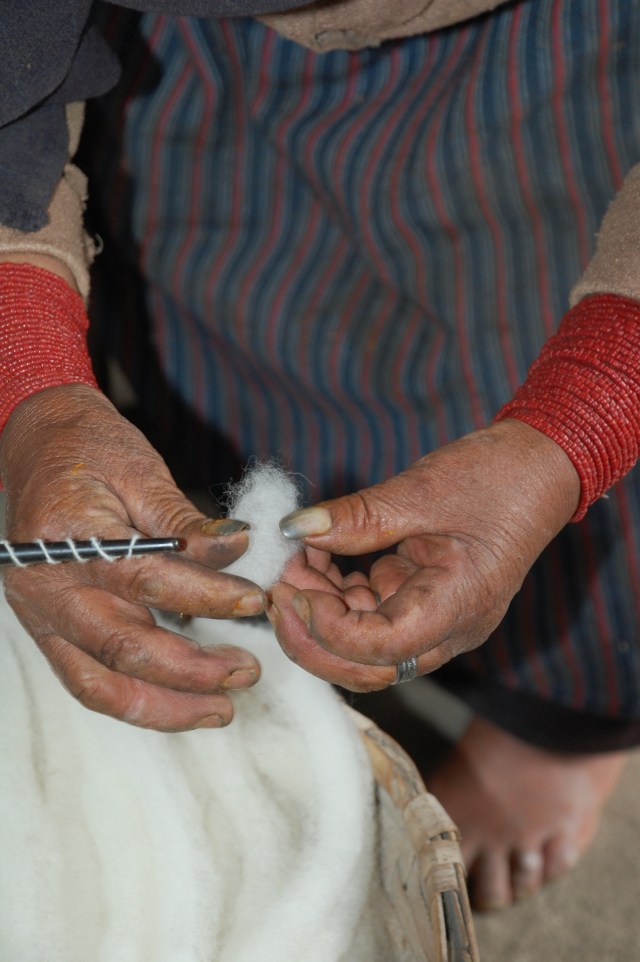
Spinning string
After Otavalo, I took a 6 hour bus ride to Baños, a small town surrounded by mountains and waterfalls, warm and humid and lovely. I rented a bike and had maybe the best day of my trip when I biked from Baños to Rio Verde. If I get sad one day and decide to run away, you know where to find me. Reference my “Ecuador found” page. I met a man named Arturo who gave me an impromptu tour of the village, including the waterfalls. He said he was a fisherman, so I asked him to take me fishing. We wandered down a trail by the river for about 30 minutes, along the way he told me about how everyone tries for hours and hours to catch the trout and they never catch any. Soon, we arrived at the spot where Arturo fishes, which turned out to be a makeshift fish hatchery of sorts. He had taken piping and flowed water from the river into various small pools, where he kept different sizes of trout. Awesome.
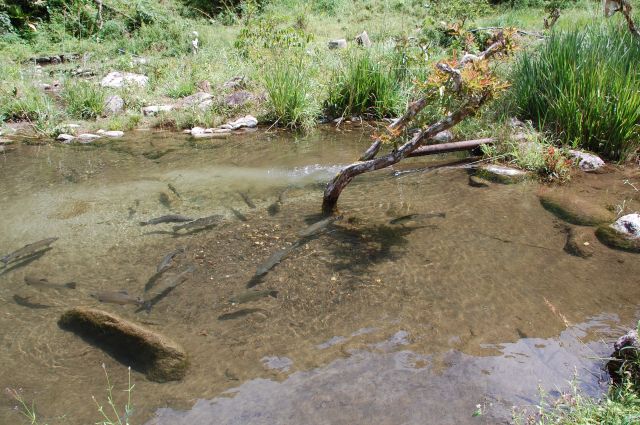
Fishing for trout
I found a horse on the side of the road. I think a “wild” horse, but it wasn´t afraid of me, so I´m not sure what that would be called…
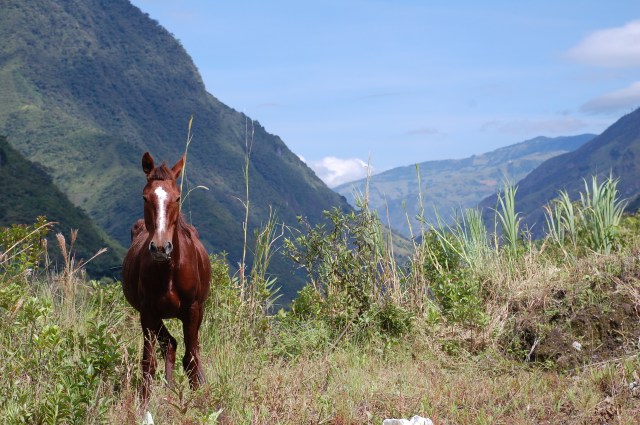
Pretty horse
Arturo and I went to the Baños Zoo, which was different because the signs with information for the animals included the “American name” for them. But, they were all wrong… i.e. there was a cheetah, which they called a cheetah, but it also said it was the American tiger. Fun.
Didn´t want to leave Baños but had to… 4 hour bus ride to Quito, good dinner in Quito, the next morning went to the airport early for my Galapagos flight, which was delayed for 3 hours. Finally got out of Quito to Guayaquil, and the flight there was delayed for an hour. Some ways the Galapagos are protected: airplane was fumigated (flight attendants had masks, passengers did not), disinfected shoes when arrived at Santa Cruz airport, disinfected hands when arrived at Santa Cruz airport, paid $100 to be allowed on the island. All well worth it.
Apparently, in the early morning light against the black rocks, the crabs in the Galapagos glow in the dark.
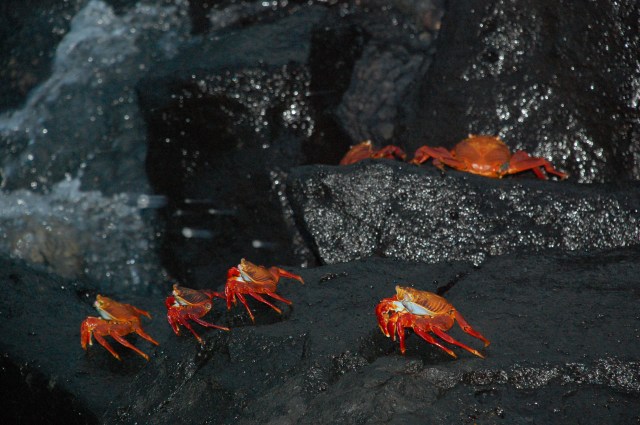
Crabs
I spent all day yesterday at Tortuga Bay, relaxing on the white sand, listening to the waves, where my only distraction was a giant iguana who kept sneaking up on me when I was asleep. I think he was trying to steal my purse.
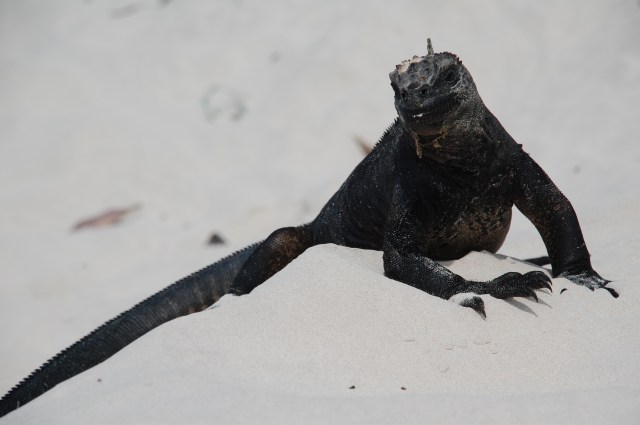
The iguana grifter
This pelican and I became BFF´s.

My BFF
Today I went to the Darwin Research Center to see Lonesome George and the giiiiiiiiiiant turtles. They just stand around and eat all day, bunch of fatties. Adorable.
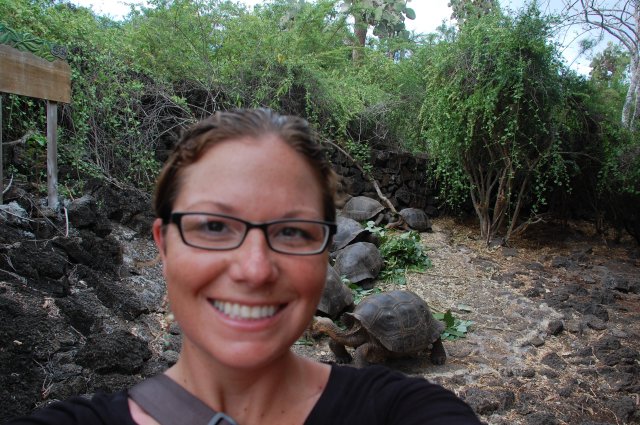
The girls are big
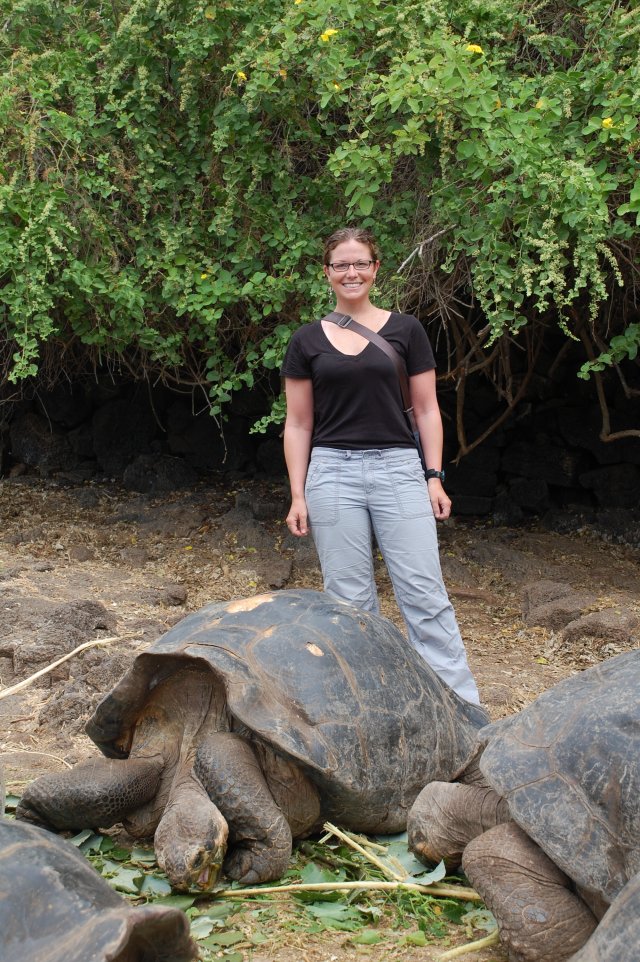
The boys are bigger
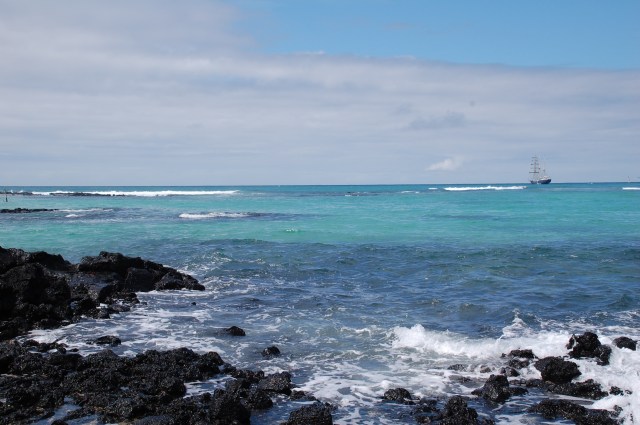
Blue, blue water
I don´t want to go home because I´m free like the wind.
Hail, mountains, civil unrest, and endearment
I´ve made it to Quito, Ecuador, and I´m sad that I had to leave Peru. The Machu trek was even better than I thought that it would be (even though I have quite a cold right now because of it).
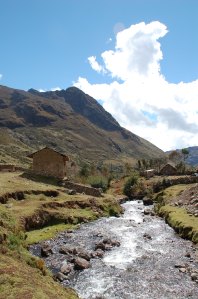
The start of the trek
The first day was rough because the first mountain we crossed was extremely steep, and as we neared the top, it began to rain… and then snow… and then hail. I had a poncho, but was still soaked and freezing. The good part was that when we reached the pass, the weather cleared, and there was a pretty surprise on the other side.

Waterfall
The first night, we camped in a valley with snowcapped mountains in the background. The first night, I was cold in my tent, but it wasn´t too bad.

View of our first campsite
We passed by many Andean houses along the way, and our guide would talk to the people in Quechua and translate for us. At one point, he stopped a boy that was walking up a mountain alone one morning and asked him what he was doing. The boy pointed to the top of a mountain and said that he was going to tend to the llamas. He was to stay there all day with them, until nightfall. He was only eight-years-old. They all wear traditional dress, including sandals. I don´t know how they´re feet don´t get frostbite, but they must be used to the cold.
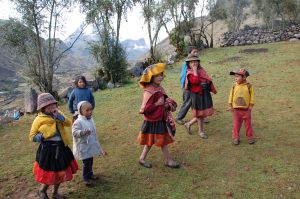
A family
We stopped here at this family´s house, and our guide talked to them. He asked one of the boys if he was going to school that day, and he said yes. The guide asked what time did it start, and the boy said 8am. It was 8:45am when he was asking him. Our guide said that all of the children have the opportunity to go to a small school in the community, and they all enroll. He said that there will be about 300 children enrolled, and at any point throughout the school day during the year, there will be about 40 children in classrooms. However, during lunchtime, all 300 children will be at school. They walk all the way to school to get a free lunch, and then walk back home. Most of the Andean children don´t finish elementary school, and if they do, it is considered a success.
The second day, we walked a lot. It was better weather, even though it was pretty cold, and it wasn´t as steep as the first day, which was wonderful. This picture is of my group, on top of the highest peak for the trek, at almost 14,000 feet.

Group picture
Our porters were amazing. They had to go through the trails very fast to arrive at the campsites (or lunch sites) to set up the tents and cooking equipment and begin cooking our food to have it ready for us when we got there. They work on this trek Monday-Thursday of each week, and they make between 100 and 150 soles each week. This is between $130 and $200 a month. It kind of made me sick to know how much they get paid to do this extremely difficult job. Peruvians are poor. The farmers and mountain people are disgustingly poor. And, for the most part, they have no options to ever be any different. I think many of them are happy, despite this, in their day to day lives, but I think that part of that happiness has to do with the acceptance that there isn´t anything more. So with that recognition, they´re able to function.
Our second night, it was way too cold. There was frost on the ground when I went to sleep and when I woke up. I didn´t sleep at all because my throat was swollen shut and hurting, and I coughed all night. Thus my current illness.
On the third day, we were originally scheduled to walk 3 hours and then arrive at a town where we would be picked up by bus and taken to another town to stay in a hostel the night before we went to Machu Picchu. Instead, there was a farmer´s strike, and we didn´t have the buses available. When the farmers strike, they put large rocks and parts of trees in the road to keep anyone from passing. So, because of this disruption, there weren´t any bus services running. Our guide managed to find a van for us to use, and we took alternate routes to try and get to Santa Theresa, the town we were to spend the night in. The farmers were striking because the current government wants to privatize the water usage in the mountains, which would mean that the mountain people would have to pay to use the water they take from rivers and streams. Completely ridiculous, given so little that these people have anyway.
The van ride was quite interesting. We met many angry villagers that had placed road blocks on the roads, we crossed 3 bridges that weren´t meant for vehicles, and the second one broke when our van was almost all of the way across. Some of the porters ended up taking boards from the other end of the bridge and placing them in different spots so that the van made it. There was a woman who was throwing rocks at the van, and our guide said to her, ¨How much money do you have in your pocket?¨ She didn´t reply. He said, Ïf you hit my van with your rocks, we will take all of the money from your pockets. If you break one of my tourists´noses, you will go straight to jail.¨And she stopped throwing the rocks.
The next morning, we couldn´t take the train to the bottom of Machu Picchu, so we woke at 4am and walked for 2 hours in the dark along the train track to reach the bottom of the mountain, where we would catch a bus up to the top. It was ridiculous. Bridges we had to cross, with rushing water underneath, and we could easily fall between the train ties. All in the dark. That part, I never thought I would experience. But, we made it.
The journey was worth it. When we got to Machu, I went up Waynapicchu first, and I got great views of the ruins.
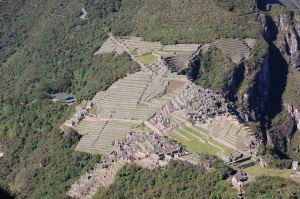
Machu from Waynapicchu
Our guide was awesome, and explained everything about the Incas and the ruins in great detail.

Group at Machu Picchu
The trek was amazing, and I´m so happy with the way everything went. My only regret is that I didn´t have a longer journey. Whereas before I saw a smidgen of baby Jesus, at Machu Picchu I definitely saw all of God, with his hands cradling my face.
The last two days have been rough because I´m soooo sick. Tomorrow I have a respite in Otavalo–away from the city, should be able to hike and relax in a nice hotel and enjoy some of the local people. I want to not be sick for the Galapagos; that is my only worry. I miss Peru already, but there will be another trip to that country in my future; it´s too much a part of me now, and I couldn´t possibly leave it forever.
Onward.
 wordsmakesentences
What you’re saying